Design a seasonal table centerpiece: UK florist's process
There is something quietly transformative about a well-made table centrepiece. It changes the whole room, really. A Sunday lunch feels a little warmer, a wedding breakfast feels more considered, and even a modest dinner for six starts to look like someone paid proper attention. If you are trying to design a seasonal table centerpiece: UK florist's process is a good place to start, because it balances creativity with practical floristry know-how, local seasonality, and the realities of the table itself.
In this guide, we'll walk through how a UK florist approaches the job from start to finish: choosing blooms that suit the season, working around vase height and conversation lines, planning mechanics, and finishing the arrangement so it feels polished rather than overdone. You'll also find a comparison table, a real-world example, a checklist, and honest advice on the mistakes people tend to make when they go from "nice flowers" to "why does this feel awkward?".
And yes, the devil is in the details. But that's also the fun bit.
Why Design a seasonal table centerpiece: UK florist's process Matters
A seasonal table centrepiece is not just decoration. It sets the mood of the whole occasion, ties the table setting together, and gives guests a focal point without getting in the way. In UK floristry, seasonality matters even more because it affects what looks fresh, what lasts well indoors, and what feels believable for the time of year. A winter arrangement full of airy meadow flowers can feel out of step, while a summer table piece packed with heavy blooms may be too dense and warm for a packed dining room.
Florists also think about practical matters people often miss. Is there enough light? Will the flowers need to sit through a roast dinner and two rounds of speeches? Is the table rectangular, round, or a long trestle shape in a village hall that's seen a hundred weddings and a few very determined buffet tables? These questions sound basic, but they make or break the finished piece.
That is why the florist's process matters. It turns a vague idea like "something seasonal and elegant" into something usable, balanced, and appropriate for the space. A good centrepiece should feel like it belongs there, not like it was dropped in from somewhere else on a whim.
It also helps the buyer make smarter decisions. If you know how a florist works, you can brief them properly, set a realistic budget, and choose the right style for your event or home. That saves time and, honestly, a fair bit of faff.
How Design a seasonal table centerpiece: UK florist's process Works
The process starts with three things: the table, the season, and the purpose. A florist will usually ask what the centrepiece is for, who needs to see across it, how long it must last, and whether it needs to match a wider colour scheme. A candlelit supper for four in a private home is very different from a corporate dinner for thirty. The logic changes, even if the flowers are beautiful in both cases.
From there, the florist chooses the structural style. Some pieces are low and sprawling, designed to sit near the centre without blocking conversation. Others are taller and more architectural, but placed carefully so sightlines still work. The mechanics matter too: floral foam, water sources, hidden vessels, chicken wire, pin holders, or grouped bud vases may all be used depending on the brief and the environmental goals of the arrangement.
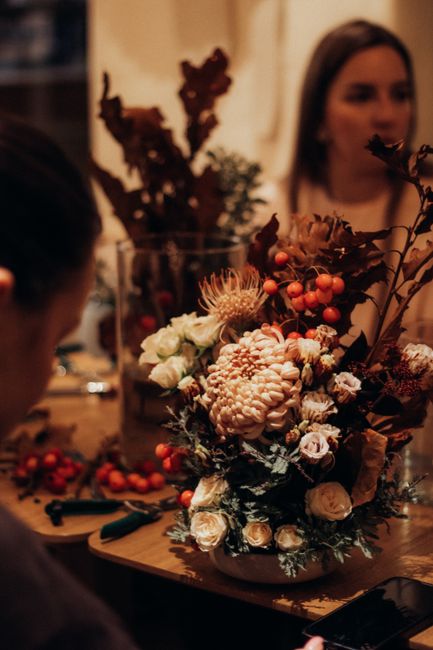
Seasonality is then translated into texture, colour, and fragrance. In autumn, you might see berries, dahlias, scabiosa, rose hips, and deeper foliage. In spring, tulips, narcissi, ranunculus, hellebores, and fresh green movement often make more sense. Summer can lean into garden roses, delphiniums, sweet peas, and herbs. Winter tends to favour structure, evergreen texture, amaryllis, berries, and more controlled shapes. A florist is not simply picking pretty flowers; they are composing a little seasonal scene.
There's also a finishing stage that many people underestimate. The arrangement is checked from multiple angles, stems are adjusted, any awkward gaps are softened, and the overall silhouette is refined. You know it's right when it looks effortless, even though it definitely wasn't.
Key Benefits and Practical Advantages
A properly designed seasonal centrepiece gives you more than visual appeal. The benefits are practical as well as decorative, which is probably why good florists spend so much time on the boring bits nobody sees.
- It fits the occasion. A seasonal arrangement feels intentional, whether it's for a dinner party, wedding, reception, shop display, or hotel table.
- It lasts better. Flowers chosen for the right season and indoor conditions tend to hold up more reliably.
- It improves table use. Low, well-proportioned designs keep conversation flowing and plates visible.
- It can be more cost-effective. Seasonal blooms are often easier to source and may offer better value than out-of-season requests.
- It creates a memorable atmosphere. The table is where people linger, so the flowers make a lasting impression.
- It supports a more thoughtful aesthetic. Seasonal design looks more natural, less forced.
For commercial settings, there's an added advantage: consistency. A florist can create a repeatable seasonal style for restaurants, hotels, offices, and event venues, which makes the brand feel coherent. If your business entertains regularly, that coherence matters more than people admit.
If you want to understand the service side behind the scenes, it can also help to review the florist's wider information pages such as about the team, sustainability commitments, and flower care guidance. Those details tell you a lot about how an arrangement is likely to be handled before it reaches the table.
Who This Is For and When It Makes Sense
This approach is useful for anyone who wants the table to look polished without feeling fussy. In practice, that includes private customers planning birthdays, anniversaries, dinner parties, Easter lunches, Christmas gatherings, and home entertaining. It also suits event planners, venue managers, corporate teams, and hospitality businesses that need flowers to do more than just "look nice".
A seasonal table centrepiece makes particular sense when the table itself is the social centre of the room. That might be a wedding top table, a restaurant's private dining table, a boardroom lunch, or a family meal where everyone ends up leaning in, passing dishes, and talking across the arrangement. In those settings, flower height and shape are not decorative extras. They are part of the guest experience.
It is less useful when the space is already crowded, the table is tiny, or the event involves lots of movement around the table. If the setting is chaotic, you probably need a simpler low design, maybe with separate bud vases rather than one large focal piece. That is not a compromise. It's good planning.
Some people also choose this style because they want a local florist to handle the entire design and delivery journey. If that's you, check the practical pages around flower delivery, delivery information, and service guarantees so you know how the arrangement will arrive and what support exists if something needs attention.
Step-by-Step Guidance
1. Start with the table and the room
Before you pick a single stem, measure the table and look at the room from guest eye level. Is the table long and narrow? Round? Tucked near a wall? Under bright daylight or dim evening lighting? A centrepiece for a bright conservatory in June needs a different approach from one meant for a candlelit December supper in a listed townhouse where every surface seems to absorb the light. You can't design well in a vacuum.
Florists also consider plate space, serving dishes, and how people will move around the arrangement. If the centrepiece is too broad, it fights the meal. If it is too tall, it interferes with sightlines. Aim for presence without dominance.
2. Choose a seasonal direction
Pick a season first, then a palette. This keeps the arrangement coherent. For example:
- Spring: pale pinks, whites, fresh greens, soft yellows, and airy shapes.
- Summer: brighter colours, garden-style mixing, and fuller blooms.
- Autumn: rust, copper, burgundy, plum, berries, seed heads, and textured foliage.
- Winter: whites, deep greens, rich reds, structural stems, and berries.
The trick is not to cram in every seasonal flower you like. Less, but better, is often the answer. A confident palette usually beats a crowded one.
3. Define the shape of the arrangement
Will it be low and compact, long and linear, or softly dome-shaped? A low arrangement is the easiest choice for conversation. A linear design works well on banquet tables. A dome suits round tables and more intimate dining. In floristry terms, shape controls everything: movement, balance, spacing, and how the eye travels across the piece.
For table centres, many UK florists prefer designs that feel gathered rather than overconstructed. That gives the piece a more natural seasonal look. To be fair, a little looseness often reads as luxury when it's done properly.
4. Select flowers, foliage, and support materials
Flowers should be chosen for texture, opening stage, scent, and longevity. Foliage is just as important. It frames the blooms, creates rhythm, and softens any gaps. Seasonal herbs can add movement and scent, though that depends on the event. Strong fragrance is lovely for a home dinner, less lovely for a crowded lunch where the food should do the talking.
Support materials matter too. You may use a ceramic bowl, a low glass vase, a mossed base, a reusable vessel, or a series of small containers. A florist will often prefer a setup that is stable, discreet, and easy to water. Nobody wants to be chasing a wobbling centrepiece halfway through dessert. That is not the vibe.
5. Build the mechanics first
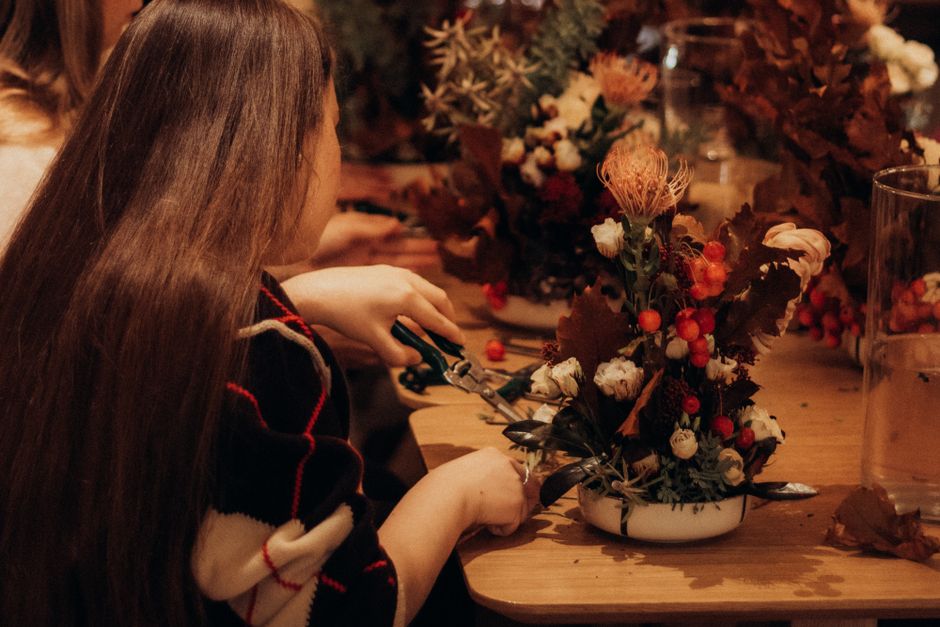
This is the hidden layer. Florists make sure the arrangement can hold water, keep stems secure, and stay fresh for the required period. Depending on the design, that may mean floral foam, chicken wire, tape grids, or reusable mechanics. The best choice depends on the flowers, the venue, and the sustainability brief.
If the arrangement is going to travel, mechanics also need to protect it in transit. A beautiful centrepiece that collapses in the car is, frankly, just an expensive pile of petals. So the mechanics are not boring. They are the whole reason the piece arrives looking like the picture in your head.
6. Create the framework and place the focal blooms
Once the base is ready, the florist sets the structure with foliage and main stems. Then focal blooms are added in a way that draws attention without creating a lopsided "big flower on one side" effect. That balance is surprisingly easy to get wrong. A good florist checks the arrangement from all sides and rotates it while working.
The best focal flowers are usually placed with intent rather than evenly spaced like dots on a page. Natural rhythm matters. A little asymmetry can make the design feel more alive.
7. Refine the texture and finish
At the end, the florist adds smaller blooms, filler, herbs, or seed heads to create texture and movement. Then the arrangement is trimmed, watered, wiped clean, and checked for gaps. The final pass often takes longer than people expect, but this is where the centrepiece stops looking "made" and starts looking designed.
If the flowers are being delivered, the handover matters too. Good packaging, sensible timing, and clear care instructions all help preserve the result. For more on what happens after the flowers leave the workshop, see the site's returns and refund information and care advice.
Expert Tips for Better Results
Here's the part that saves time and improves the result almost immediately.
- Keep sightlines low for dining tables. If guests must lean sideways to talk, the design is too tall.
- Use one strong idea. One clear seasonal story often looks more elegant than several competing ideas.
- Balance fragrance carefully. Some flowers smell beautiful close up but can overwhelm a table.
- Think in layers. A good centrepiece usually has structure, bloom, texture, and soft movement.
- Let the season lead. If a flower feels out of place for the time of year, it usually is.
- Refresh the water or mechanics before guests arrive. This one sounds obvious, and yet it gets missed.
There is also a more strategic tip: match the level of finish to the event. A casual lunch can handle a looser garden look. A formal dinner, press event, or corporate setting often needs a cleaner silhouette and more control. Same flowers, different mood.
And if you're ordering for a business, ask about corporate accounts if seasonal table arrangements will be a recurring need. Regular orders are easier when the setup is straightforward from the beginning.
Common Mistakes to Avoid
The most common mistake is designing for the vase instead of the table. People fall in love with an arrangement idea and forget that guests need to eat, talk, pour drinks, and reach the bread basket. The table is the boss here, not the flowers.
Another issue is using too many varieties. If every stem is a different character, the arrangement can look busy rather than rich. A restrained mix usually reads better. You want contrast, yes, but not confusion.
Here are a few more problems to watch for:
- choosing flowers that are not seasonal or not suited to indoor warmth
- making the centrepiece too tall for conversation
- ignoring scent levels in small rooms
- using weak mechanics that shift during transport
- leaving awkward gaps at the edge of the arrangement
- forgetting the table setting around it, such as candles, menus, and glassware
One small but important point: don't overcorrect by making everything tiny. A centrepiece still needs presence. Otherwise it becomes a token gesture, and nobody wants that. Not even the table.
Tools, Resources and Recommendations
A florist's toolkit for seasonal table design is fairly modest, but each item matters. You do not need a room full of gadgets. You need the right basics and a steady hand.
| Tool or material | What it does | Best use case |
|---|---|---|
| Low vase or vessel | Supports compact or sprawling arrangements | Dining tables, dinner parties, everyday entertaining |
| Chicken wire or floral mechanics | Helps stems hold position without overpacking the design | Naturalistic and reusable arrangements |
| Sharp floristry scissors or snips | Gives clean cuts for better water uptake | Preparation and final adjustment |
| Conditioning bucket | Keeps flowers hydrated before arranging | Any fresh flower setup |
| Reusable ribbons or wraps | Adds finish without unnecessary waste | Presentation and gifting |
| Water source or hidden reservoir | Maintains freshness for longer tableside display | Longer events and warm rooms |
For the practical side of ordering and receiving flowers, the pages on delivery, payment, and guarantees are worth checking before you book. If you're planning ahead for a special occasion, those details save last-minute surprises.
And if you are curious about the brand's broader values, the sustainability information gives useful context for how a modern florist may think about materials, sourcing, and waste.
Law, Compliance, Standards, or Best Practice
For table centrepieces, the main "compliance" issue is usually not a flower law as such. It is about safe, considerate practice, especially in venues. Florists and event organisers should think about fire safety around candles, stable placement on tables, clear walkways, and spill risks on fabrics or polished surfaces. In a busy UK venue, that matters more than people expect.
Venue rules can also shape the design. Some locations restrict open flame, some prefer reusable materials, and some need arrangements to avoid blocking exits, signage, or service paths. If the centrepiece is being used in a hospitality or corporate environment, a florist should work within the venue's own policies and the client's brief.
Best practice also includes honest communication about freshness, timing, and care. If a design is meant to last for several hours, that should be clear from the start. If the blooms are delicate, or if the room is warm, the arrangement may need light conditioning or a late delivery window. Good floristry is as much about managing expectations as it is about arranging stems.
There is also an ethical side. A responsible florist will pay attention to sourcing, handling, and waste reduction. You may not see that on the table, but it is part of the process all the same.
Options, Methods, or Comparison Table
If you are deciding how to design the centrepiece, this quick comparison may help. The right method depends on the table, the event, and how long the flowers must last. No single approach wins every time, which is annoying but true.
| Method | Best for | Pros | Trade-offs |
|---|---|---|---|
| Low compact arrangement | Dinner tables, restaurants, intimate events | Easy conversation, polished look, stable | Less dramatic from a distance |
| Long and loose runner | Banquet tables, weddings, long trestles | Strong visual flow, elegant across a long table | Requires more planning and surface space |
| Bud vases grouped together | Smaller budgets, casual settings, flexible layouts | Easy to move, easy to style, adaptable | Less of a single focal statement |
| Statement vessel with focal blooms | Formal occasions, reception tables, brand displays | High impact, memorable silhouette | Can dominate the table if not scaled carefully |
If you are unsure which method is right, ask yourself one question: do I want guests to notice the flowers first, or do I want them to notice the atmosphere first? That answer usually points you in the right direction.
Case Study or Real-World Example
Imagine a late-autumn family gathering for ten people in a London home. The dining table is rectangular, the room is warm, and the meal will stretch over several courses. The client wants something seasonal, but not dark or heavy. A florist would likely steer this towards a low, elongated arrangement with muted peach roses, burgundy foliage, soft berries, and textural greenery rather than a dense mound of blooms in the centre.
Why that choice? Because the shape keeps sightlines open, the palette feels autumnal without becoming gloomy, and the design can sit comfortably beside candles and place settings. In the last hour before guests arrive, the florist would check the spacing again, make sure no stems are crowding the eating area, and tidy the outer edge so it feels finished from every seat.
The lovely part is that people often remember the table without being able to explain why. They just know it felt welcoming. That is the aim. Not perfection, just ease. A centrepiece should make a room feel cared for.
For clients who want a similar result on a repeat basis, a florist can build a seasonal framework for each quarter of the year, adjusting flowers and tone while keeping the structure consistent. That is especially useful for venues and businesses that want a recognisable look without rebriefing every single time.
Practical Checklist
Use this before you place your order or begin arranging.
- Confirm the table shape and approximate size.
- Decide whether the arrangement must stay low for conversation.
- Choose the season and the mood first.
- Set a colour palette with one or two accent tones.
- Check whether fragrance should be light, medium, or strong.
- Ask how long the arrangement needs to last.
- Plan for candles, glassware, dishes, and serving platters.
- Confirm delivery timing and handling.
- Review care instructions for the flowers once they arrive.
- Make sure the final design suits the venue or home environment.
If you're booking from a florist's site, it is sensible to review the small print too. The pages on terms and conditions, privacy policy, cookie policy, and accessibility statement may not be glamorous reading, but they help set expectations. That's just good housekeeping, really.
Conclusion
To design a seasonal table centerpiece: UK florist's process is really about making flowers work for people, not the other way round. The best arrangements are seasonal, balanced, practical, and in tune with the table they sit on. They support the occasion quietly, which is often the mark of good design. You notice the atmosphere, not the effort behind it. And that is exactly the point.
Whether you are planning a dinner at home, styling a wedding table, or managing a recurring floral brief for a business, the same principles apply: start with the setting, respect the season, and keep the guest experience in mind. Simple enough in theory. A little trickier in practice. But once you know the process, the choices become much clearer.
Get a free quote today and see how much you can save.
And if you are still weighing things up, that is perfectly fine. Good floral design rewards a thoughtful brief, and a seasonal table piece is one of those details that can quietly lift the whole room.
Frequently Asked Questions
What makes a table centerpiece seasonal?
A seasonal centrepiece uses flowers, foliage, textures, and colours that naturally suit the time of year. That might mean tulips and narcissi in spring, garden roses in summer, dahlias and berries in autumn, or evergreens and amaryllis in winter. The result feels more in tune with the moment and often looks more authentic.
How tall should a dining table centerpiece be?
For dining, it is usually best to keep the main mass low enough for easy conversation across the table. Taller designs can work if they are very narrow or placed away from sightlines, but most florists default to low or mid-height arrangements for practical reasons. If people must lean around it, it is too tall.
What flowers work best in a seasonal table arrangement?
That depends on the season and the event. A florist may use roses, tulips, ranunculus, sweet peas, dahlias, chrysanthemums, berries, hellebores, or evergreen foliage, depending on what suits the brief. The best flower is not always the most expensive one; it is the one that works in the room.
How far in advance should I order a centerpiece from a florist?
For a standard private order, a bit of notice is helpful, especially around busy periods such as Christmas, Valentine's Day, and wedding season. For events or corporate bookings, earlier is better so the florist can source seasonal stems and plan the mechanics properly. Last-minute can work sometimes, but it narrows the options.
Can I request specific colours as well as seasonal flowers?
Yes, and that is usually a sensible brief. Florists often work from a colour palette first and then choose the most suitable seasonal stems within it. If your palette is very exact, be aware that some combinations may be easier to source than others, particularly at short notice.
Are seasonal centrepieces more sustainable?
They can be, especially when they rely on flowers that are in natural supply and when the florist uses reusable mechanics or careful material choices. Sustainability depends on the full design approach, not just the season label, so it is worth asking how the arrangement is built and handled.
What if my table is very narrow or awkwardly shaped?
Then the design should adapt to the table, not the other way round. A narrow runner, a series of bud vases, or a compact low arrangement may be more suitable than one large centrepiece. Odd-shaped tables often benefit from simple, linear thinking rather than a big statement piece.
Do fragrant flowers work for table centrepieces?
They can, but fragrance should be chosen carefully. In a small room or a formal dining setting, heavy scent can become distracting. Lightly scented flowers and herbs often work well. For lunch or a casual home setting, a little fragrance can be lovely.
What is the difference between a centerpiece and a runner arrangement?
A centrepiece usually focuses attention around one central point or compact cluster, while a runner arrangement stretches along the length of the table. Runners are often better for long tables and larger events, while centrepieces suit smaller or round tables where a focal point feels more natural.
How do florists keep centerpieces fresh during an event?
Florists use proper conditioning, water sources, stable mechanics, and timing to keep flowers looking good for as long as possible. The arrangement is usually assembled close to the event time if freshness is important, and care instructions may be provided so the client can top up water or keep the piece out of heat where possible.
Can I reuse the centerpiece after the event?
Sometimes, yes. If the design uses a reusable vessel or separate components, it may be possible to repurpose it at home or in another setting. Flowers with strong longevity are more likely to be reused, but that depends on how long the arrangement has already been on display and how it has been handled.
How do I choose between a florist-made centerpiece and DIY?
If you want a polished result, limited stress, and a design that suits the table properly, a florist-made arrangement is usually the safer choice. DIY can be enjoyable for smaller, informal occasions, but it often takes longer than expected and the final shape can be harder to control. Truth be told, flowers have a knack for doing their own thing if you blink.