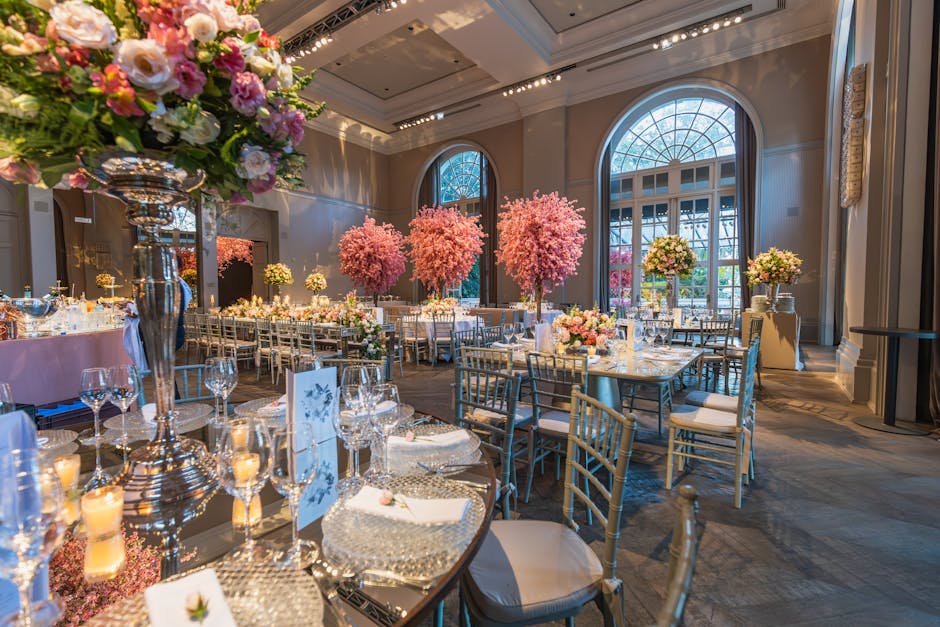
Professional staging tips for venue flowers in large UK halls
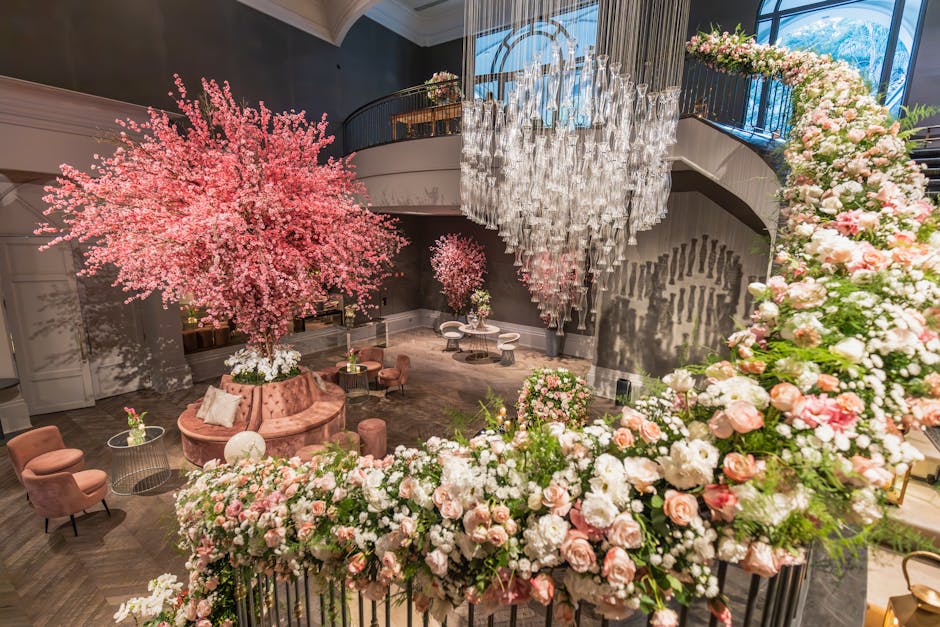
Large UK halls can be brilliant spaces for weddings, awards evenings, charity dinners, conferences, and milestone celebrations - but they can also swallow floral decor if the staging is not thought through properly. That is the real challenge with professional staging tips for venue flowers in large UK halls: it is not just about choosing beautiful flowers, it is about making sure they read well across distance, hold their shape under event lighting, and feel intentional in a room with high ceilings, long sightlines, and a lot of visual noise.
Get the scale wrong and even expensive arrangements can look a bit lost. Get it right and the whole room feels calmer, more polished, and easier to photograph. In this guide, we will walk through the practical decisions that make venue flowers work in big halls - from layout and mechanics to sightlines, timing, and the little staging details people often forget until the room is half set up and the clock is running. Truth be told, that last part happens more often than anyone likes to admit.
Whether you are planning for a civic hall, hotel ballroom, university space, village hall, or a converted historic venue, the same basic principles apply: flowers need structure, proportion, durability, and a role in the wider event design. Let's get into the part that actually makes the arrangement feel professional.
Why Professional staging tips for venue flowers in large UK halls Matters
In a small room, flowers can get away with being charming and fairly simple. In a large hall, they have to do a lot more work. They need to anchor the space, guide the eye, soften hard architecture, and hold their own against tables, stage lighting, AV screens, drapes, and the general buzz of an event. If they are too small, too low, or placed without a clear plan, they disappear. If they are oversized without enough balance, they can feel heavy or awkward.
That balance is why professional staging matters. Large halls usually have some combination of distance, height, and echo. You can hear the room before you fully see it, and the flowers need to feel like part of that environment rather than a decorative afterthought. The best arrangements do three things at once: they look good from close range, they read clearly from the back of the room, and they support the event's mood without blocking people's view or movement.
There is also a practical side. Large venue flowers are often handled by several people - florists, venue teams, caterers, AV crews, event planners, and sometimes volunteers. The more structured the staging plan, the less likely something gets bumped, watered badly, blocked by signage, or positioned where it should not be. And in busy halls, things get moved. That is just reality.
Key takeaway: In a large UK hall, flower staging is not about "more flowers"; it is about better scale, better placement, and better control over how the room is experienced.
How Professional staging tips for venue flowers in large UK halls Works
Professional flower staging is really a design-and-logistics process. The florist or event stylist starts by looking at the room itself: ceiling height, stage position, entry points, aisle width, table layout, lighting, and where guests will actually be standing, sitting, or taking photos. Then the flowers are planned around those sightlines. That is the bit people often miss. A gorgeous arrangement can still fail if it sits in the wrong line of view.
The process usually involves a few layers. First comes the focal structure - the main arrangements that define the room, often at entrances, on stage, at ceremony points, on registration desks, or on the top table. Next comes the supporting layer - smaller arrangements or repeated floral elements that create rhythm through the venue. Finally, there is the practical layer: containers, water sources, mechanics, transport protection, and safe installation.
In large halls, staging also has to account for scale distortion. A bouquet that feels generous on a display table may look tiny once placed on a ten-metre-long top table. Similarly, a single tall arrangement might look impressive at eye level but vanish in a space with a mezzanine or high balcony. The solution is not always to make everything bigger. Sometimes it is to repeat shapes, vary heights, and use groupings so the room feels designed rather than dotted with random florals.
One useful way to think about it: flowers in a large hall should behave like part of the architecture. They can soften a corner, frame a stage, or create a visual pause between hard surfaces. When they do that well, the entire room feels more considered. You notice it instantly, even if you cannot quite say why.
Key Benefits and Practical Advantages
Well-staged venue flowers do more than look pretty. They affect how people move, where they pause for photos, and how polished the event feels overall. In a large hall, those details matter because the room itself often has a strong personality. Flowers help shape it.
- Better visual impact at distance: Strong scale, shape, and repetition help flowers read clearly from the back of the room.
- Improved photography: Good staging creates natural photo moments without cluttering the frame.
- Clearer event zoning: Flowers can separate ceremony, dining, reception, and presentation areas without putting up physical barriers.
- Stronger atmosphere: Floral design softens a hall's harder edges, which is especially useful in modern civic or conference spaces.
- More efficient setup: A clear plan reduces last-minute repositioning and awkward adjustments during room turnaround.
- Lower risk of damage: Purposeful placement keeps arrangements away from busy walkways, heat sources, and likely collision points.
There is a commercial benefit too. For event organisers, staged flowers are often part of the overall impression that clients remember. If the floral design feels coherent, the venue tends to feel more premium. That does not mean it has to be lavish. It just has to feel deliberate. That is a surprisingly big difference.
And if you are working on corporate or repeat event bookings, consistency matters. A hall that can present clean, adaptable, reliable floral staging is easier to sell across different event types. If your organisation handles ongoing hospitality or event orders, it may also be worth looking at corporate accounts for regular floral requirements, especially where timings, approvals, and recurring deliveries need a smoother process.
Who This Is For and When It Makes Sense
This approach is most useful for anyone responsible for making a large indoor venue feel coherent and attractive. That includes event planners, venue managers, florists, wedding coordinators, hospitality teams, and businesses arranging formal functions in sizeable halls. It is also relevant if you are a private client booking a venue with a strong architectural presence and you want the flowers to feel proportionate rather than decorative-on-the-side.
It makes sense whenever the room is big enough that standard table flowers are not enough on their own. If guests will see the space from multiple angles - entering through a foyer, walking into a main hall, looking from a stage, or viewing the room in photos - then staging becomes part of the event design, not just an add-on.
Large UK halls present a few common scenarios:
- Wedding receptions: Floral staging may need to support aisle moments, the ceremony table, the top table, and the dining setup.
- Corporate events: Branding, neatness, and clear sightlines matter just as much as colour and texture.
- Charity dinners and gala evenings: The flowers often need to feel elegant without blocking speakers or table conversation.
- Conferences and awards: Stage flowers must be visible on camera and not interfere with microphones, screens, or sponsor signage.
- Civic and community events: Flexible, cost-aware designs are often needed, but the room still needs presence.
If you are unsure whether the space needs full staging or just a few anchor arrangements, ask yourself a simple question: will the room look empty without floral structure? If the answer is yes, you probably need a staged approach rather than scattered displays.
Step-by-Step Guidance
Here is a practical way to stage flowers in a large hall without overcomplicating it. This is the part that saves time later, which is always welcome when the room turnaround is tight and someone is asking whether the table plan has changed again.
- Walk the venue before you design anything. Look at entrances, the main view lines, stage height, natural light, and where guests will stand for photos.
- Identify the floral "anchors." These are the places that need the strongest impact, such as the stage, ceremony point, entrance, or top table.
- Map the supporting pieces. Decide where smaller arrangements, bud vases, or repetition points will reinforce the main design.
- Check proportions against room scale. A design that is too low or too sparse will vanish; a design that is too tall can dominate the room and block conversation.
- Choose mechanics that suit the venue. Foam-free options, water tubes, weighted containers, and stable vessels are often preferable where movement is likely.
- Plan the delivery and staging order. Large halls often have loading restrictions, narrow access routes, and limited setup windows.
- Stage from the main sightline outward. Start where guests will first see the flowers, then complete the supporting areas.
- Do a room-level check at the end. Step back. Look from the doorway, the stage, and a few table positions. If something feels off, it usually is.
In practice, the best setups often come from editing, not adding. If the room already has strong features - stone walls, dramatic windows, chandeliers, ornate ceilings - the flowers should frame those features, not wrestle them.
Think in layers, not isolated arrangements
A useful trick is to design the room in layers: arrival, main event, and secondary touchpoints. Arrival could be a doorway arrangement or foyer display. Main event could be stage florals or the top table. Secondary touchpoints could be bar flowers, serving areas, or a few repeated tableside pieces. This creates visual continuity, and it feels far more professional than placing one large display and hoping for the best.
Expert Tips for Better Results
Here is where small choices make a big difference. Large halls are unforgiving in a way smaller rooms are not. You can get away with a lot less. Or, to put it more bluntly, the room will politely expose every weak decision you make.
1. Use height variation deliberately. If every arrangement is the same height, the room can feel flat. Mix low, medium, and tall pieces so the eye moves naturally. Just keep the tallest pieces where they will not block faces or screens.
2. Repeat shapes for cohesion. A consistent vase form or recurring flower family makes the whole hall feel planned. Repetition sounds boring on paper, but in a large venue it is often what makes the design look expensive.
3. Match the design to the room's architecture. Georgian windows, modern hotel ballrooms, and converted church halls all ask for slightly different treatments. The flowers should work with the room, not fight it.
4. Prioritise the first view. Guests often judge the room in the first five seconds. Make sure the entrance or primary sightline has the strongest composition.
5. Keep practical access in mind. Caterers need space, photographers need angles, and guests need to move. A beautiful arrangement that blocks a corridor is not actually beautiful for long.
6. Plan for water, heat, and timing. Large venues can be warm, draughty, or dry depending on the building and season. Arrange for replenishment where needed and keep an eye on delicate stems.
7. Build in a buffer for delivery. If the flowers arrive late, everything becomes harder. If they arrive early enough to condition properly, you buy yourself calm. And calm is gold on event day.
If you are arranging regular event florals, good aftercare and delivery reliability matter too. It can be worth reviewing the supplier's delivery process and flower care guidance so you know how arrangements are handled before they ever reach the hall.
Common Mistakes to Avoid
Most venue flower problems in large halls are not dramatic. They are small misjudgements that become visible because the room is so open. Here are the ones that show up most often.
- Using arrangements that are too small for the room: They can look lovely in isolation but vanish in the wider space.
- Ignoring sightlines: Flowers placed in the wrong spot can block speeches, screens, or key faces in photos.
- Creating too many unrelated focal points: If every corner screams for attention, nothing feels intentional.
- Leaving setup until the last minute: Big halls need time for staging, room changeovers, and final adjustments.
- Forgetting about movement: Guests, staff, and equipment all create collision risk.
- Overcomplicating the palette: Too many colours can look messy in a large room, especially under mixed lighting.
- Neglecting maintenance: If the flowers are out for hours, they need proper conditioning and sensible placement away from heat sources.
Another easy mistake is designing only for the close-up view. It is fair enough - florists naturally care about detail - but in a hall, the long shot matters just as much. Sometimes more. A bloom that looks exquisite on a styling table may not be the bloom that actually carries the room from the far end.
And yes, one odd thing to avoid: putting a huge statement arrangement directly in front of a speaker because it "looks balanced there." Balanced from which angle, exactly? Not from the delegate seat, that's for sure.
Tools, Resources and Recommendations
You do not need a mountain of equipment to stage flowers well, but you do need the right practical basics. In large halls, the quality of the mechanics often decides how well the design survives setup and service.
- Weighted vases and containers: Helpful in high-traffic areas or where the venue floor is uneven.
- Water-safe transport boxes: Keep arrangements stable in transit and reduce handling damage.
- Floral tape, pins, and binding materials: Useful for securing mechanics discreetly.
- Conditioning buckets and clean water supply: Essential for keeping stems fresh before installation.
- Room plan or floor layout: Even a simple annotated sketch helps avoid last-minute confusion.
- Measuring tape and step ladder: Basic, yes, but extremely useful when ceiling height and stage sightlines matter.
- Protective floor coverings: Consider them when water or heavy containers might mark the venue surface.
If you are coordinating flowers for a recurring venue or corporate setting, having a consistent ordering and account process can also reduce stress. That is where a service like flower delivery can support timing, while payment information and returns and refund guidance become useful when you are handling multiple bookings or approvals. Not glamorous, perhaps, but it matters.
For organisations that care about supplier transparency, about the company, guarantees, and sustainability information are worth reviewing as part of supplier due diligence. Good staging is not only about the flowers on the day; it is also about confidence in the process behind them.
Law, Compliance, Standards, and Best Practice
For large UK halls, compliance is usually less about floral design rules and more about practical venue responsibilities. The main thing is to avoid creating hazards. That means keeping walkways clear, preventing trip risks, using stable containers, and making sure floral installations do not interfere with exits, equipment, or emergency access. Venue teams will often have their own site rules, and those should be followed carefully.
Where flowers are arranged near electrical kit, candles, catering areas, or stage equipment, common sense becomes your best compliance tool. Do not assume the room can absorb a design just because there is space. Large does not always mean safe. It just means the hazards are spread out a bit more.
There can also be practical expectations around fire exits, access routes, and public movement that venue managers will already know well. If you are working in a historic or council-managed hall, there may be specific setup instructions, loading constraints, or restrictions on floor fixings. Ask early. It saves everyone the awkward mid-setup shuffle that nobody enjoys.
From a professional best-practice point of view, a few standards hold true almost everywhere:
- Design for visibility without obstruction.
- Keep installations stable and easy to inspect.
- Use clear communication between florist, planner, and venue staff.
- Allow enough time for conditioning, transport, and installation.
- Document the final layout if the event is recurring or multi-day.
If accessibility matters in the event space - and it usually should - you may also want to review the venue's own accessibility statement or related guidance. Floral staging should never make a room harder to navigate for guests with mobility needs. That is basic professional courtesy, really.
Options, Methods, or Comparison Table
There are several ways to stage flowers in a large hall, and the right choice depends on budget, room size, event style, and the level of formality. Here is a simple comparison to help with decision-making.
| Method | Best for | Strengths | Limitations |
|---|---|---|---|
| Single statement pieces | Entrances, stage corners, focal points | Strong impact, simple to brief | Can feel sparse if used alone in a very large hall |
| Repeated medium arrangements | Dining halls, conference spaces, long rooms | Creates rhythm and consistency | Needs enough units to avoid looking scattered |
| Layered height design | Ballrooms, gala dinners, wedding receptions | Good depth, elegant visual movement | Requires careful sightline planning |
| Floral zoning | Multi-use halls, events with separate functions | Defines spaces clearly without hard barriers | Needs coordination with room flow and furniture layout |
| Minimal accent staging | Modern corporate spaces, budget-conscious events | Clean, flexible, less intrusive | May not deliver enough presence in very large venues |
For most large UK halls, a hybrid approach works best. A single statement piece on its own can be underwhelming. A room filled with dozens of unrelated small arrangements can feel busy and tired. The sweet spot is usually a core focal point, supported by repeated elements and a few quieter accents. Simple, but not simplistic.
Case Study or Real-World Example
Picture a large civic hall in winter: high ceilings, pale walls, a long stage, and rows of tables stretching further than you first expected. The planner wants the room to feel warm and celebratory, but not crowded. In that setting, the smartest move is usually not to place flowers everywhere. It is to choose a few strong moments and let them work hard.
A practical approach might look like this: two substantial arrangements framing the stage, a repeated low floral design along the top table, a pair of entrance pieces that set the tone from the moment guests arrive, and smaller echo arrangements on key tables or service points. The colour palette stays restrained - perhaps whites, blush, soft green, and one deeper accent tone - so the room feels unified under daylight and evening lighting.
What changes the result is the staging order. First, the stage florals define the room's focus. Then the entrance pieces cue the mood. Finally, the smaller items fill in the rhythm. When guests enter, they do not just notice "flowers"; they feel a room that has been designed with purpose. That feeling is subtle, but very real.
In our experience, that is often when people say, "oh, it all just works." Which is flattering, yes, but it usually means the behind-the-scenes planning did its job quietly and properly.
Practical Checklist
Use this before final sign-off or installation.
- Have you measured the main sightlines from entrance, stage, and guest seating?
- Are the floral arrangements scaled to the room, not just the tables?
- Will any arrangement block speakers, screens, exits, or access routes?
- Have you confirmed venue loading times and setup windows?
- Are the containers stable enough for a busy hall?
- Have you chosen flowers that can hold up to the event duration and room temperature?
- Is the colour palette consistent across the main focal points?
- Have you planned a maintenance check if the event runs for several hours?
- Do you know who is responsible for final adjustments on site?
- Have you reviewed delivery, care, and contingency arrangements in case timing changes?
Quick summary: if the flowers look balanced from the doorway, do not obstruct movement, and feel coherent from table level and stage level, you are probably in good shape.
Conclusion
Professional staging for venue flowers in large UK halls is really about perspective. Big rooms need structure. They need proportion. They need flowers that can carry visual weight without becoming cumbersome. When you plan for the room's architecture, movement, lighting, and sightlines, the floral design becomes more than decoration - it becomes part of the event experience.
That is the real win. Guests feel it even when they cannot articulate it. The room seems calmer, richer, and more deliberate. And from the organiser's side, everything tends to run a bit smoother when the floral plan is thoughtful from the start.
If you are planning a large-scale event and want the florals to feel polished rather than improvised, a well-structured setup plan is the best place to start. Small details, properly handled, make a very big difference. Honestly, that is half the job.
Get a free quote today and see how much you can save.
Frequently Asked Questions
How do you make flowers stand out in a large hall?
Use scale, repetition, and strong placement. In a large hall, flowers need visible structure from a distance, so combine focal arrangements with supporting pieces and place them where guests first look.
What flowers work best for venue staging in big UK halls?
That depends on the event style, season, and room conditions, but sturdy stems with good shape usually perform better than delicate blooms alone. A balanced mix of focal flowers, foliage, and textural elements tends to stage well.
Should large halls use tall arrangements or low ones?
Usually both. Tall arrangements help with visibility and room presence, while low designs preserve conversation and table sightlines. A layered mix often works better than choosing one height only.
How early should venue flowers be planned?
As early as possible, especially for weddings, galas, and corporate events. The room layout, delivery timing, access rules, and styling needs all affect the final design, so leaving it late can limit good options.
How do you avoid flowers looking lost in a large venue?
Do not rely on a single small arrangement. Use a clear staging plan with anchor pieces, repeated elements, and a palette that reads well from across the room. The room should feel intentionally dressed.
Are flowers safe around stage equipment and guest walkways?
They can be, if they are placed with care. Keep arrangements stable, away from cables, exits, and high-traffic areas, and always coordinate with the venue team if there is AV or catering nearby.
What is the biggest mistake people make with hall flowers?
Underestimating scale. A design that looks elegant up close can disappear completely in a big room. The other common problem is poor placement, especially blocking sightlines or crowd movement.
Do I need a florist experienced in large venues?
It is strongly recommended. Large halls bring different challenges from smaller rooms: higher ceilings, longer sightlines, tighter setup windows, and more coordination with venue staff. Experience really helps.
How do you coordinate flowers with the rest of the venue decor?
Start with the room's visual priorities: stage, entrance, tables, signage, and lighting. Then let the flowers support those features instead of competing with them. Cohesion matters more than adding extra pieces.
What should I check on the day of setup?
Confirm access times, table positions, stage layout, and final sightlines. Then do a last walk-through from the guest's point of view. If something feels off, adjust it before the room is live.
Can venue flowers be reused or repurposed during the event?
Yes, often they can. Entrance flowers can sometimes move to a reception area, and ceremony flowers may be repurposed for the top table or photo backdrop. Just plan the movement carefully in advance.
Where can I learn more about ordering, care, or service details?
It helps to review practical pages such as flower care guidance, delivery information, and the provider's guarantees so you understand handling and expectations before event day.